
How to Prepare Your Smart Contracts for a Security Audit: A Complete Web3 Checklist
Blockchain technology has created new opportunities for businesses through decentralized finance (DeFi), NFTs, tokenization, and Web3 applications. Smart contracts are at the center of these innovations, automatically executing transactions and managing digital assets according to predefined rules.
However, even a minor coding error or business logic flaw can expose a blockchain project to serious security risks. Since deployed smart contracts can be difficult to modify, identifying vulnerabilities before launch is essential.
This is why preparing for a smart contract security audit should be an important part of every blockchain development strategy.
In this guide, we explain how to prepare your codebase, documentation, testing environment, and development team for a successful smart contract audit.
What Is a Smart Contract Security Audit?
A smart contract security audit is a systematic examination of blockchain code to identify vulnerabilities, logic errors, insecure permissions, and potential attack paths.
The process generally combines automated security analysis, manual code reviews, and controlled exploit testing to evaluate how contracts behave under different conditions.
A professional audit can help identify vulnerabilities such as:
Reentrancy attacks
Access control weaknesses
Integer overflow and underflow
Oracle manipulation
Flash loan attack vectors
Front-running and MEV risks
Business logic vulnerabilities
Proxy and upgradeability issues
Why Should You Prepare Before a Smart Contract Audit?
An audit is more effective when developers provide a stable codebase, clear documentation, and a well-defined project scope.
Poor preparation can create unnecessary delays, make important functionality harder to understand, and leave critical components outside the agreed assessment scope.
Preparing in advance helps your auditing team:
Understand the project's architecture and functionality.
Identify critical contracts and integrations.
Review code more efficiently.
Investigate complex business logic.
Reproduce potential vulnerabilities.
Provide more actionable remediation recommendations.
Most importantly, preparation helps ensure that the audit focuses on the actual security risks within your project.
1. Finalize Your Smart Contract Code
Before beginning an audit, make sure the contracts included in the assessment are close to their intended deployment state.
Frequent code changes during an audit can affect findings and make it difficult to confirm which version was reviewed.
Consider the following preparation steps:
Finalize the main contract functionality.
Remove unused and unnecessary code.
Review debugging functions and development-only features.
Confirm compiler versions and configurations.
Document external libraries and dependencies.
Maintain a clear version history.
Avoid introducing unplanned changes during the audit.
A stable codebase gives auditors a consistent foundation for security testing.
2. Prepare Technical Documentation
Documentation helps auditors understand how your smart contracts are designed to operate.
Simply providing source code may not explain every business rule, permission requirement, or intended transaction flow.
Prepare documentation covering:
Project architecture: Explain the overall blockchain application and how its contracts interact.
Contract functionality: Describe the purpose of each important contract and its main functions.
Business logic: Explain tokenomics, payment mechanisms, governance rules, withdrawal conditions, and other important operations.
Access permissions: Identify administrative roles, privileged functions, ownership controls, and authorization requirements.
External integrations: Document oracle providers, third-party protocols, token standards, and external contract dependencies.
Deployment configuration: Provide relevant information about constructor arguments, initialization settings, proxy configurations, and deployment addresses.
Clear documentation helps auditors compare intended functionality with actual code behavior.
3. Review Common Smart Contract Vulnerabilities
Before submitting your project, perform an initial internal security review.
This does not replace an independent audit, but it can help developers identify obvious weaknesses and improve code quality.
Pay particular attention to these security areas.
Reentrancy Protection
Check whether external contract calls can trigger unexpected repeated execution before important state changes are completed.
Access Control
Verify that sensitive functions are restricted to authorized users and administrative roles.
Arithmetic Operations
Review calculations involving token balances, fees, percentages, and financial limits. Confirm that arithmetic behavior is appropriate for the language and compiler version.
Oracle Integrations
Evaluate how external price feeds are accessed, validated, and handled when data becomes unavailable or unreliable.
Transaction Ordering
Consider whether transaction ordering, front-running, or MEV-related behavior could affect protocol operations.
Upgradeability
Review proxy contracts, initialization functions, storage layouts, and administrative upgrade permissions.
For additional technical guidance, read our Smart Contract Security Audit Guide.
4. Test Your Contracts Before the Audit
Testing helps developers identify functional problems and unexpected behavior before an independent security assessment begins.
Your preparation should include:
Unit tests for important contract functions.
Integration tests for interactions between contracts.
Edge-case testing for unusual inputs.
Tests for authorization and permission boundaries.
Transaction failure and exception handling tests.
Testing of important financial calculations.
Deployment testing in an appropriate test environment.
Fuzz testing can also help explore unexpected input combinations and identify unusual execution paths.
Remember that successful unit tests do not prove that a smart contract is secure. Security auditing is still necessary to investigate attack scenarios and complex business logic flaws.
5. Provide Access to the Correct Blockchain Environment
A smart contract audit requires an accurate understanding of the project's target blockchain environment.
Prepare information about:
Target blockchain network.
Programming language and compiler version.
Contract repository and relevant branches.
External contract dependencies.
Proxy and upgrade configurations.
Deployment scripts.
Testing environment and configuration.
Relevant integration documentation.
Femto Security supports smart contract auditing across ecosystems including Ethereum, Solana, Polygon, Arbitrum, BNB Smart Chain, and Avalanche.
The languages covered include Solidity, Rust, Vyper, and Move.
Providing accurate technical information helps auditors understand the project's environment and identify platform-specific security considerations.
6. Understand the Role of Automated and Manual Security Testing
A comprehensive smart contract audit should not rely on automated scanning alone.
Automated security tools can identify known vulnerability patterns, suspicious code structures, and potential weaknesses. However, they may produce false positives or fail to recognize complex business logic issues.
Manual code review provides another important layer of analysis. Experienced auditors examine how contract functions interact, evaluate permission boundaries, and investigate potential attack scenarios.
At Femto Security, the smart contract audit methodology combines:
Automated static analysis.
Expert manual code review.
Proof-of-concept exploit development.
Vulnerability reporting and remediation guidance.
Fix verification.
For organizations interested in broader application security, Femto Security's Source Code Review service provides an additional way to examine software code for security weaknesses.
7. Prepare for the Audit Report and Remediation Process
The purpose of an audit is not simply to discover vulnerabilities. It is also to help development teams understand findings and address them appropriately.
A professional audit report typically includes:
Vulnerability descriptions.
Severity classifications.
Technical evidence and affected components.
Potential security impact.
Recommended remediation steps.
Relevant proof-of-concept evidence where applicable.
After receiving the report, developers should review findings, prioritize remediation, implement fixes, and arrange verification of important corrections.
Do not assume that changing one vulnerable function automatically resolves every related security issue. Changes can affect other contract components, so retesting is important.
Smart Contract Auditing vs. Penetration Testing
Smart contract auditing and penetration testing are complementary security activities, but they focus on different areas.
A smart contract audit focuses on blockchain code, contract logic, permissions, and blockchain-specific attack vectors.
Penetration testing evaluates the security of applications, APIs, networks, and infrastructure by simulating controlled attacks against authorized targets.
For a broader assessment of your technology environment, explore Femto Security's Penetration Testing Services.
Organizations can also use Vulnerability Assessment Services to identify and prioritize weaknesses across their IT infrastructure.
Combining appropriate security assessments can provide a more complete view of an organization's security posture.
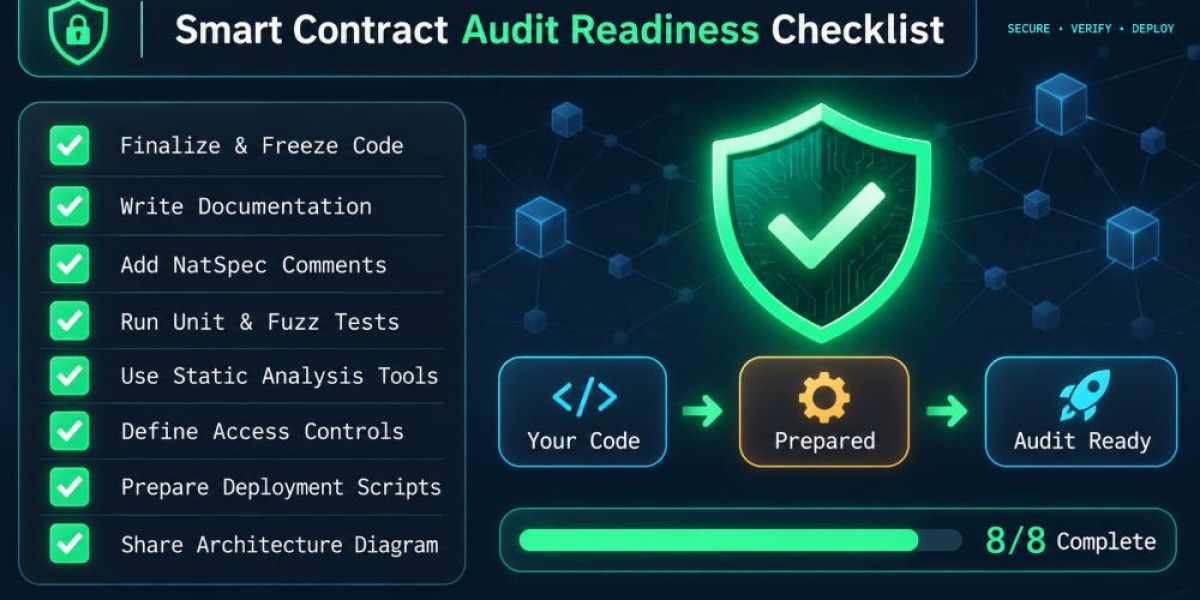
Smart Contract Audit Preparation Checklist
Use this checklist before starting your next smart contract security audit.
Finalize the source code included in the audit scope.
Confirm compiler versions and configuration.
Document contract architecture and functionality.
Explain business logic and tokenomics.
Identify privileged accounts and permissions.
Document external dependencies and integrations.
Prepare unit and integration tests.
Review known vulnerabilities internally.
Provide relevant deployment information.
Establish a process for addressing and verifying findings.
Completing these steps can help your development team approach the audit with greater clarity and efficiency.
How Femto Security Supports Smart Contract Security
Choosing an experienced security partner is an important decision for any blockchain project.
Femto Security provides specialized smart contract auditing services for DeFi protocols, NFT platforms, and Web3 applications.
Its methodology combines automated analysis, expert manual reviews, and proof-of-concept exploit development to investigate security weaknesses before deployment.
The service examines major vulnerability categories, including reentrancy, access control flaws, integer overflow and underflow, flash loan attacks, oracle manipulation, front-running, logic errors, and upgradeability issues.
The audit process also includes detailed reporting, remediation recommendations, and fix verification to help development teams address identified findings.
If you are preparing to launch a new blockchain application or upgrade an existing protocol, a professional security review can help you better understand potential risks.
Explore the service: Smart Contract Auditing by Femto Security.
Conclusion
Preparing for a smart contract audit is an important step toward building a more secure blockchain application. A finalized codebase, clear documentation, comprehensive testing, and accurate deployment information can help make the assessment more effective.
Automated tools are valuable, but they should be combined with expert manual reviews and controlled exploit testing to investigate complex security risks.
Whether you are developing a DeFi protocol, NFT marketplace, token platform, or decentralized application, make security a priority before deployment.
Secure your code before it goes live. Partner with Femto Security to strengthen your smart contract security and build greater confidence in your Web3 project.