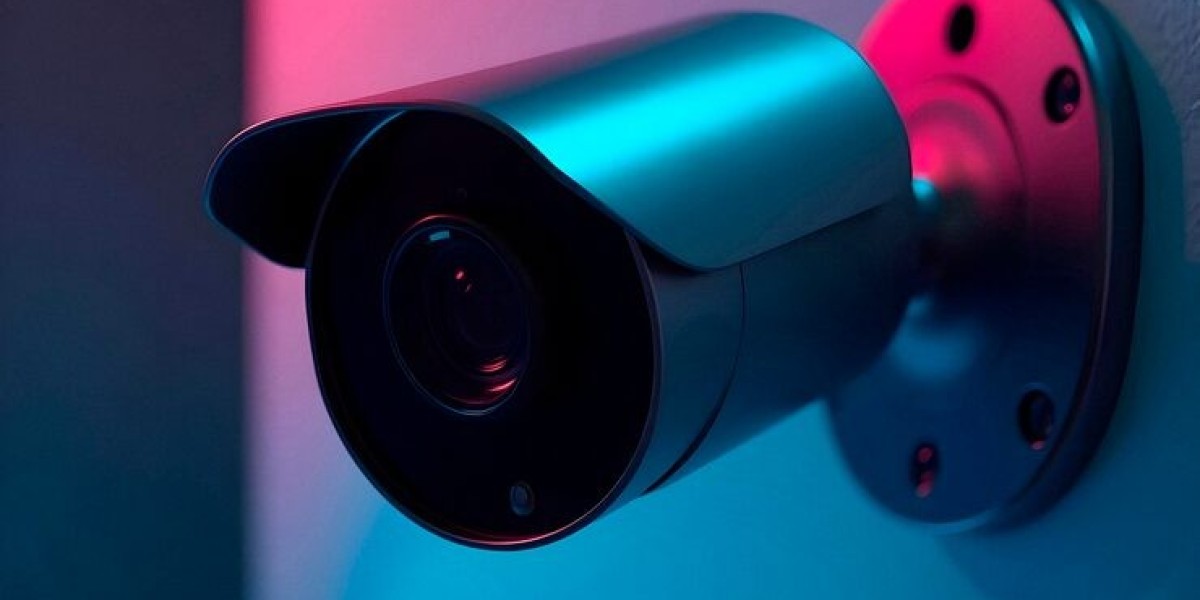

Maintaining round-the-clock observation across physical perimeters demands infrastructure capable of operating without interruption. Deploying dedicated Security Cameras ensures persistent monitoring, capturing crucial events that event-triggered systems frequently miss. When integrated with fortified Door Locks, these systems establish a resilient defense posture against unauthorized entry. Continuous video recording (CVR) eliminates temporal gaps in coverage, supplying unbroken evidentiary trails for both commercial enterprises and residential estates. Understanding how high-end optical components, continuous power distribution, and automated physical barriers interface is essential for engineering an uncompromised defense setup.
Technical Fundamentals of Round-the-Clock Monitoring
To achieve uninterrupted observation, optical hardware must overcome severe Environmental and photometric challenges.
High-End Image Sensors and Low-Light Optics
Standard lenses falter when ambient illumination drops. Continuous monitoring systems utilize specialized large-aperture lenses paired with back-illuminated CMOS sensors.
Dynamic Range Optimization: Wide Dynamic Range (WDR) technologies balance stark illumination contrasts, such as bright vehicle headlights against pitch-black alleyways.
Full-Color Night Vision: Advanced sensor technology utilizes ambient star-lit spectrums to produce colorized feeds in near-complete darkness without relying entirely on intense infrared spotlighting.
Uninterrupted Power Architectures
A monitoring system is only as reliable as its power feed. Power-over-Ethernet (PoE) setups deliver power and high-bandwidth data transmission over a single category cable, streamlining cabling while enabling centralized battery backup (UPS) integration.
Architecture and Storage Strategies for Continuous Feeds
Continuous high-definition video generation consumes massive storage volumes and network bandwidth. Managing these feeds demands tailored storage configurations.
+-------------------------------------------------+ | Continuous Video Capture | +-------------------------------------------------+ | H.265 / AV1 Compression | +---------------------------------+ | | v v +-----------------------+ +-----------------------+ | Edge MicroSD Array | | Centralized NVR | | (Short-term Cache) | | (RAID 5 / RAID 10) | +-----------------------+ +-----------------------+ | | +----------------+----------------+ | v +---------------------------------+ | Integrated Gateway & Physical | | Access Controls | +---------------------------------+Bandwidth Mitigation and Advanced Compression Algorithms
Modern high-resolution cameras utilize dynamic compression formats like H.265 and AV1. These codecs analyze static frame elements, transmitting only modified pixels to lower storage requirements by up to 50% without compromising visual clarity.
Local vs. Cloud Continuous Video Storage
| Storage Modality | Data Retention Capability | Redundancy Level | Latency Impact |
| Network Video Recorder (NVR) | Multi-terabyte local arrays | High (RAID 5/10) | Ultra-Low |
| Edge MicroSD Storage | Temporary local caching | Low (Single Point) | Minimal |
| Enterprise Cloud Vaults | Indefinite scale-out retention | High (Multi-Zone) | Dependent on Uplink |
Local Network Video Recorders (NVRs) fitted with surveillance-grade hard drives remain the gold standard for latency-sensitive installations. Edge storage acts as a fail-safe backup during network dropouts, re-syncing footage to the central vault upon reconnection.
Perimeter Integration: Unifying Optical and Physical Security
Optical observation provides passive oversight; deterrence requires combining visual feeds with active entry management.
Linking Visual Surveillance with Smart Door Locks
Synchronizing Security Cameras with automated Door Locks establishes an intelligent barrier network. When optical analytics detect unauthorized lingering near an entry point, automated access controls can initiate preventative locking sequences, while alerting security staff.
Automated Access Verification Workflows
Approach Recognition: Lenses identify a human figure approaching a access portal.
Biometric Validation: Secondary visual algorithms scan for recognized credentials or facial structures.
Control Trigger: Upon verification, signals release high-grade physical barriers or electronic mortise units.
Audit Logging: The system stamps the timestamped video snippet directly to the access management database.
Strategic Deployment Protocols Across Diverse Environments
Proper physical placement directly impacts optical performance and coverage efficacy.
Residential Perimeter Optimization
Ingress Points: Position high-resolution wide-angle lenses over main doorways and ground-floor access points.
Sightlines: Angle lenses downward at 15 to 20 degrees to minimize sun flare and overhead obstructions.
Cross-Field Coverage: Arrange units in overlapping fields of view to eliminate blind zones around blind corners.
Commercial and Enterprise Installations
Large-scale environments rely on pan-tilt-zoom (PTZ) units combined with static wide-angle optics. Fixed units maintain baseline contextual visibility, while PTZ units dynamically track movement across vast indoor or outdoor spaces.
Mitigating Cyber Threats and Ensuring System Longevity
Continuous connection to internal networks makes surveillance infrastructure a potential target for malicious exploitation if improperly secured.
Network Segmentation and Cyber Hardening
Surveillance traffic must be strictly isolated on dedicated Virtual Local Area Networks (VLANs). Disabling unneeded protocols (like UPnP), enforcing 802.1X port authentication, and updating firmware regularly prevents intrusion into broader enterprise networks.
Environmental Hardening and Maintenance
Outdoor deployments require IP67 or IP68 weatherproofing and IK10 vandal-resistance ratings. Regular physical maintenance includes wiping optical domes with anti-static microfiber cleaning solutions and checking weather seals to avoid moisture buildup.
Final Synthesis on Continuous Defense Infrastructure
Implementing a comprehensive 24/7 observation framework demands careful selection of low-light optics, robust recording configurations, and strict network isolation protocols. By marrying advanced Security Cameras with heavy-duty Door Locks, properties achieve a proactive defense network that deters intruders, captures critical evidence, and maintains total perimeter awareness every hour of the day.