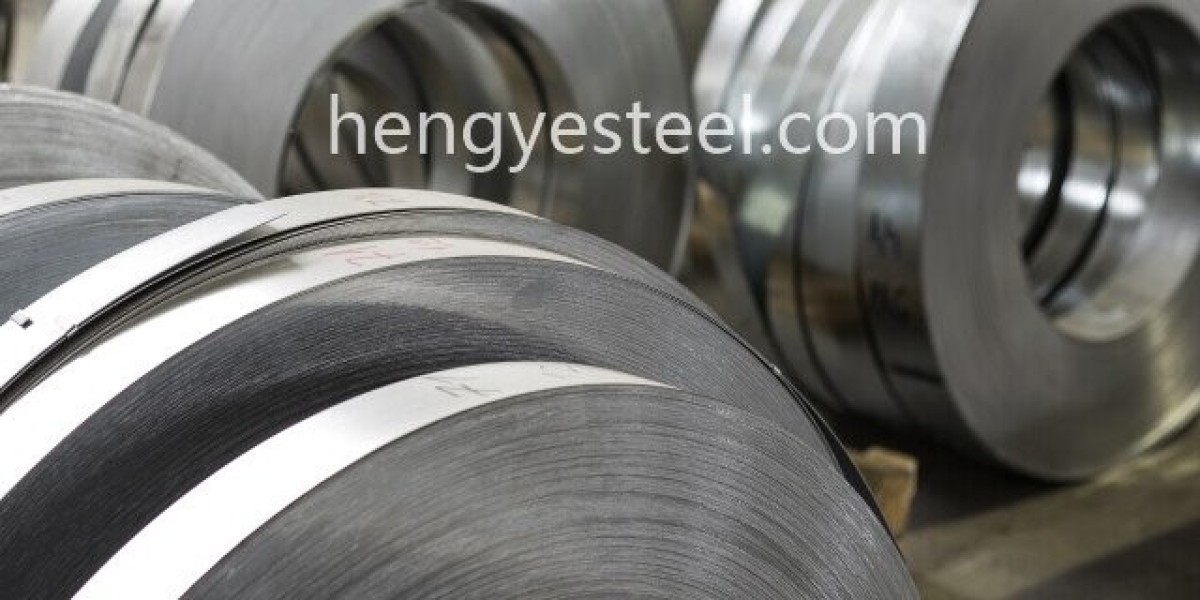

Modern manufacturing depends on materials that can move efficiently from raw stock to finished components without creating unnecessary difficulties during processing. Steel strip supports this requirement in applications ranging from formed hardware to machinery assemblies. When evaluating Cold Rolled Carbon Steel Strip, manufacturers need to consider how material composition, rolling history, surface condition, and subsequent fabrication influence the finished part. These factors affect not only production consistency but also the suitability of the material for different industrial applications.
Material selection begins with understanding the relationship between carbon content and the intended manufacturing process. Carbon steel contains iron and carbon, with its composition influencing strength, hardness, ductility, and response to heat treatment. Lower-carbon materials are often considered for components requiring forming, while other compositions may suit applications where greater hardness or wear resistance is important. The appropriate choice depends on the finished component rather than the material name alone. Buyers should communicate the part's intended function and manufacturing route before deciding which steel grade best fits their requirements.
Cold rolling changes the condition of the steel as it passes through processing equipment. The operation reduces the material and improves dimensional consistency and surface quality compared with conventional hot-rolled stock. However, deformation also affects the material's mechanical behavior. Annealing may be used when greater ductility is needed, while additional finishing operations can influence flatness, surface texture, and suitability for further fabrication. Understanding this processing history helps manufacturers assess whether a particular strip is appropriate for bending, stamping, or other forming operations.
Purchasing decisions should reflect the demands of the complete production process. Engineers may prioritize formability and surface consistency for visible components, while hardware manufacturers may focus on how the material responds to punching, bending, or assembly. Buyers should also consider the condition in which the strip will be delivered, the requirements of subsequent coating or finishing, and the consistency expected between different batches. Reviewing material documentation and discussing application requirements with a supplier can help identify potential mismatches before production begins. A clear purchasing specification also reduces misunderstandings between material suppliers and component manufacturers.
Processing compatibility is particularly important when steel strip enters automated production. Variations in flatness, edge condition, or mechanical behavior can affect how material feeds through equipment and how accurately components are formed. For manufacturers working with repeated stamping or roll-forming operations, consistent incoming material helps maintain predictable workflows. The evaluation should therefore include the interaction between steel properties and the actual tooling, forming sequence, and finished component design. Material selection is most effective when engineering and purchasing teams assess these factors together rather than treating procurement as an isolated activity.
Functional performance develops through the relationship between the material and its manufacturing environment. Cold-rolled strip can be processed through bending, pressing, stamping, slitting, and other fabrication methods, depending on its grade and condition. Each operation introduces different demands. Tight bends require suitable ductility, while repeated forming places importance on material consistency. Tooling design and process settings must also correspond to the steel's characteristics. If a component will undergo heat treatment after forming, its intended final properties should influence the original material decision. Coordinating these stages can help manufacturers limit avoidable rework and maintain dependable production quality.
Surface engineering is another important consideration. A relatively smooth, uniform surface can provide a useful starting point for painting, coating, or decorative finishing, although appropriate cleaning and pretreatment may still be necessary. Surface defects, residual contaminants, or inconsistent preparation can affect the appearance and adhesion of later finishes. Carbon steel also requires suitable protection when exposure to moisture or corrosive environments is expected. Depending on storage and application requirements, manufacturers may use temporary protective measures during transportation and apply a suitable coating or other protective treatment during subsequent processing.
The experience of using steel strip is reflected in the efficiency of downstream manufacturing. Material that unwinds predictably, feeds smoothly, and responds consistently to forming operations can make production easier to manage. Clear identification, suitable packaging, and protection against handling damage also help maintain material condition before processing. For purchasing teams, communication about storage, delivery, and traceability can be just as important as the initial material selection. These practical details influence how readily a steel product can be incorporated into an existing manufacturing workflow.
Appearance also matters when steel strip becomes part of a visible product. A consistent surface can support an even painted finish, while clean edges and controlled forming help components fit neatly into finished assemblies. Depending on the intended use, manufacturers may choose additional polishing, coating, plating, or other finishing processes. The original strip should be selected with these later treatments in mind, since surface preparation and material condition influence the results. In this way, appearance is connected directly to material engineering rather than being treated as a final cosmetic decision.
Dongyang Hengye Steel Strip Co., Ltd. serves the steel strip industry, where material consistency, processing requirements, and application suitability are important considerations for industrial buyers. When evaluating steel strip for manufacturing projects, purchasers can discuss their intended application, forming requirements, surface expectations, and supply needs with the company. Further information about its products and services is available at https://www.hengyesteel.com/.